Retail One
Quick Audit
Consolidating three fragmented entry experiences into one unified flow for iPad-based retail tools.
I led the design of Quick Audit, a foundational entry point that helps Mobile Experts quickly understand why a customer is in store and what actions are available before moving into execution.
The goal was to replace three separate entry experiences with one. This work helped shift Retail One from a collection of tools into a more cohesive, agent-centered platform.
The issue wasn't a single screen.
It was a fragmented entry experience. Retail interactions aren't linear. Agents handle multiple needs at once, but the existing systems weren't built for that.
Design a single entry experience that:
I led the Quick Audit experience end-to-end:
Real-world validation
Because this experience changes how interactions begin, it needed to work in real store environments. I partnered closely with UX research to ensure the design reflected real retail behavior.
Retail work doesn't follow a script. Tasks overlap and shift mid-conversation.
Agents juggle multiple tasks at once — upgrade, verification, eligibility — all in parallel.
Moving between entry points slows conversations and disrupts the customer experience.
Context had to be re-entered across systems, adding friction at every step.
Retail doesn't operate in steps — it operates in conversations.
One Seamless Quick Audit Flow
The solution wasn't a new screen. It was a new way of thinking about how retail interactions begin.
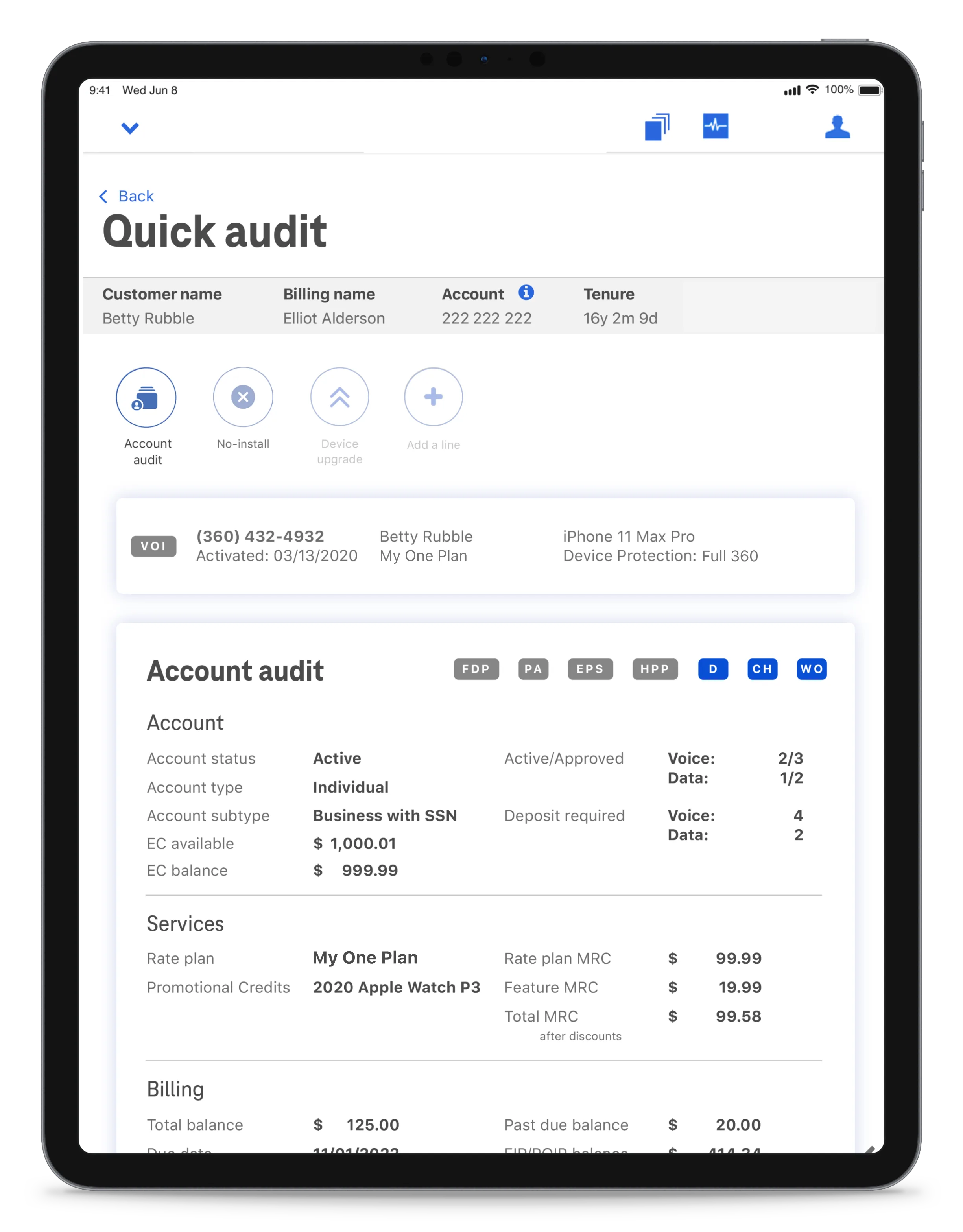
Consolidating Three Entry Points
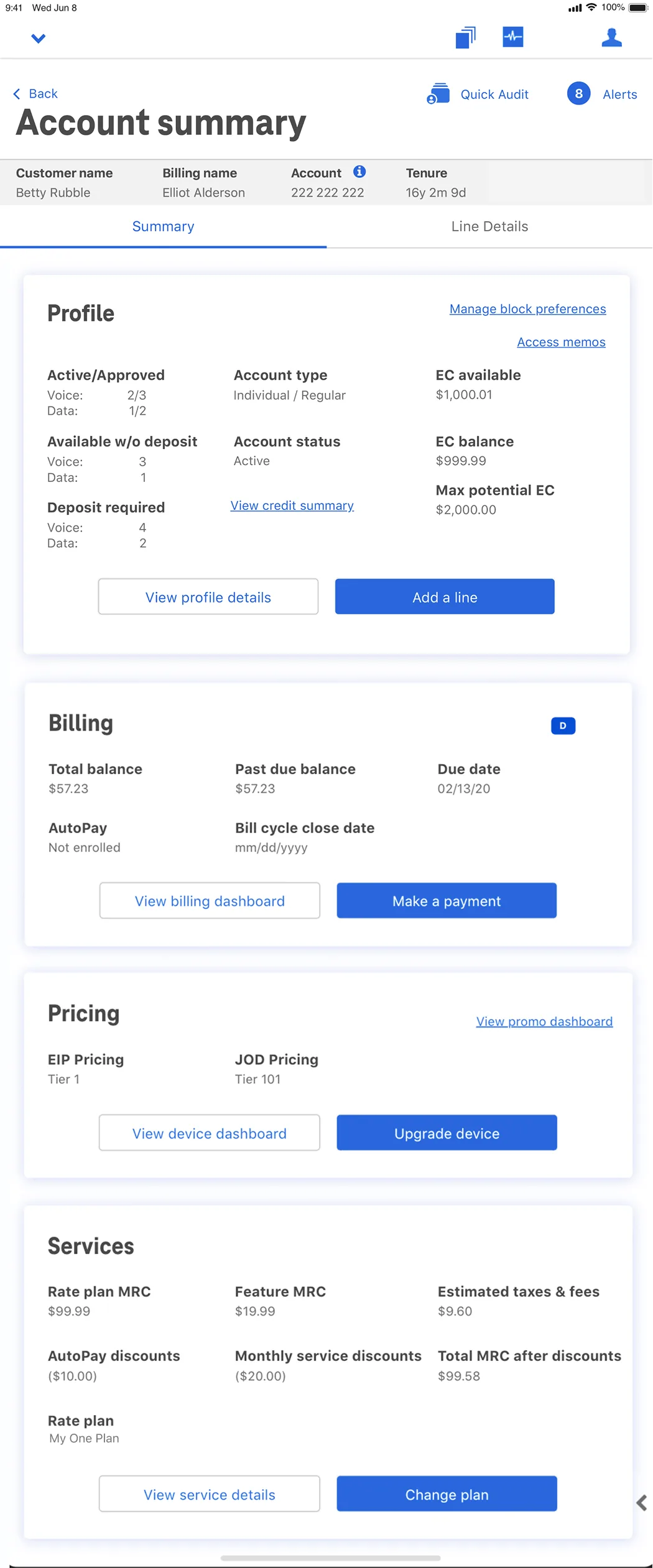
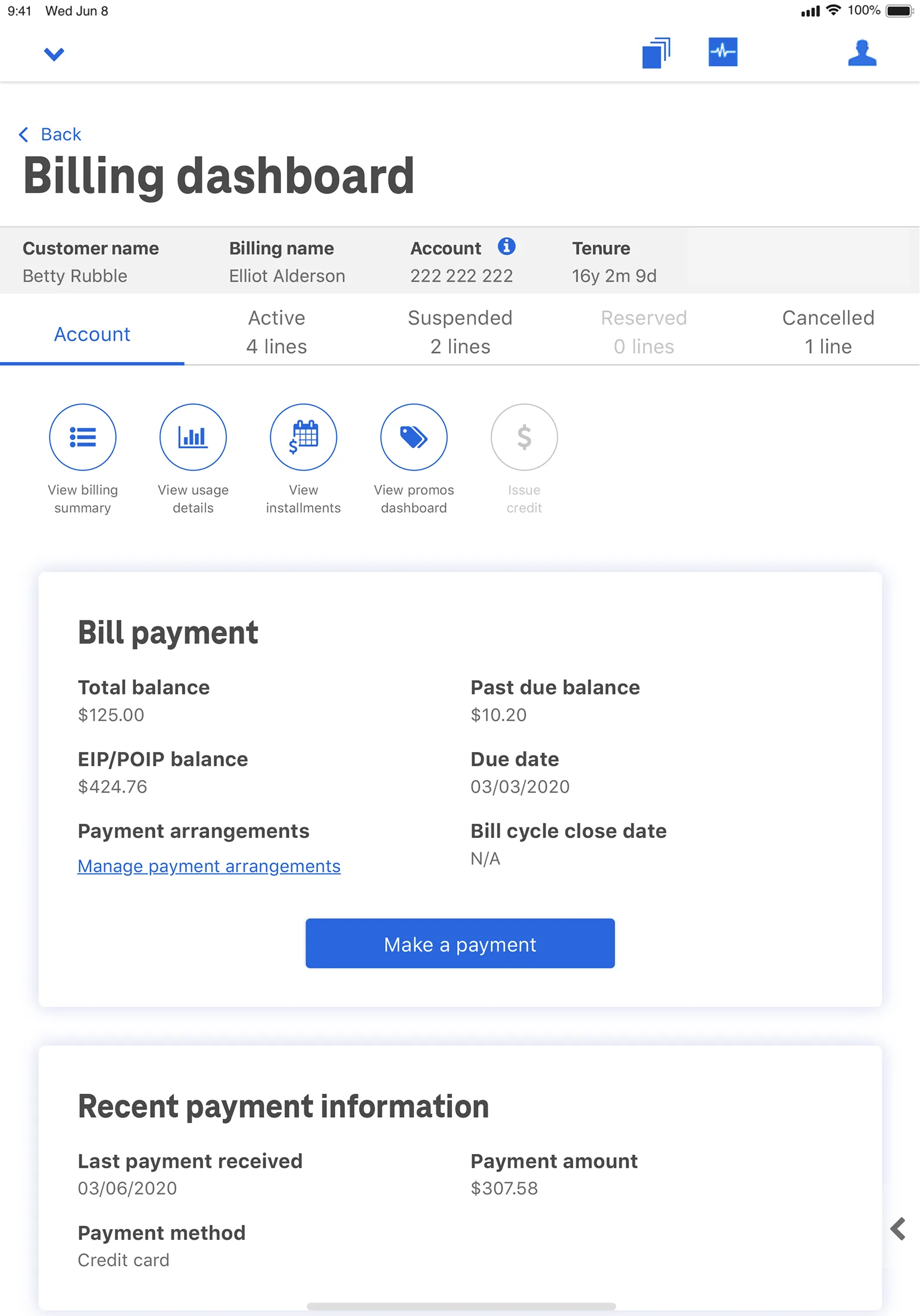
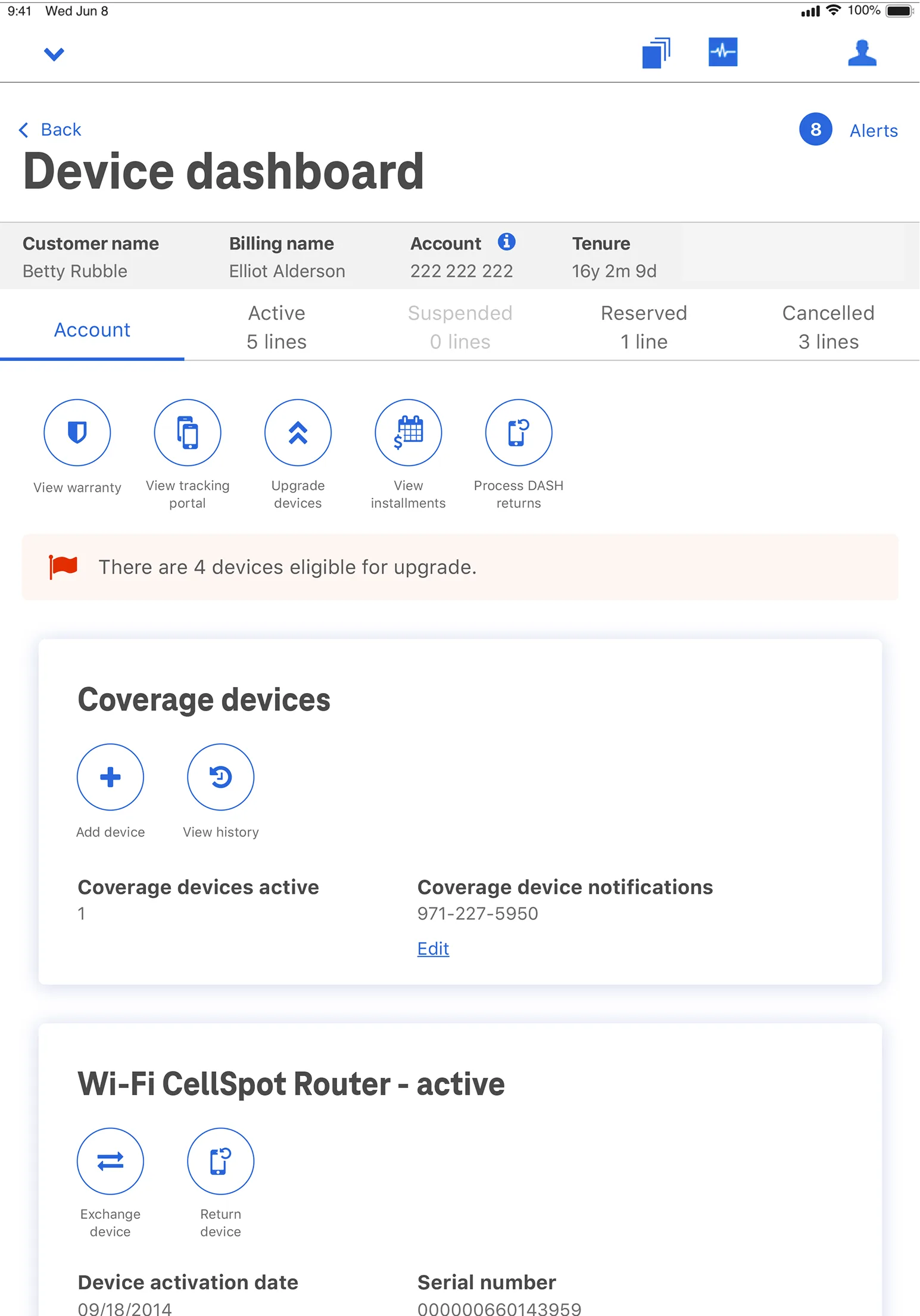
Collapsed three separate entry experiences into one unified flow that appears after the initial reason for visit, allows additional needs to surface naturally, and removes unnecessary transitions between tools.
Designing for Non-Linear Workflows
Supports multiple reasons for visit simultaneously. Agents can handle parallel tasks — upgrade, verification, eligibility — without switching contexts or re-entering information.
Leveraging Existing Intelligence
NBA insights surface upfront, reducing manual questioning and guiding the conversation without scripting it. The system works for the agent, not against them.
Avoiding Duplication
Quick Audit is positioned as context-setting, not execution. Downstream flows remain authoritative, focused on signals rather than replacing existing logic.
Shifting a platform from tools to experience
One part of a bigger transformation
This work was part of a larger platform transformation. The Quick Audit is a tangible example of how a system-level vision becomes real in day-to-day workflows.
The final layer — native iOS
Beyond the Quick Audit, I contributed to modernizing the broader Retail One experience to align with Apple Human Interface Guidelines — replacing dense, desktop-style layouts with touch-first, scannable screens built for iPad.
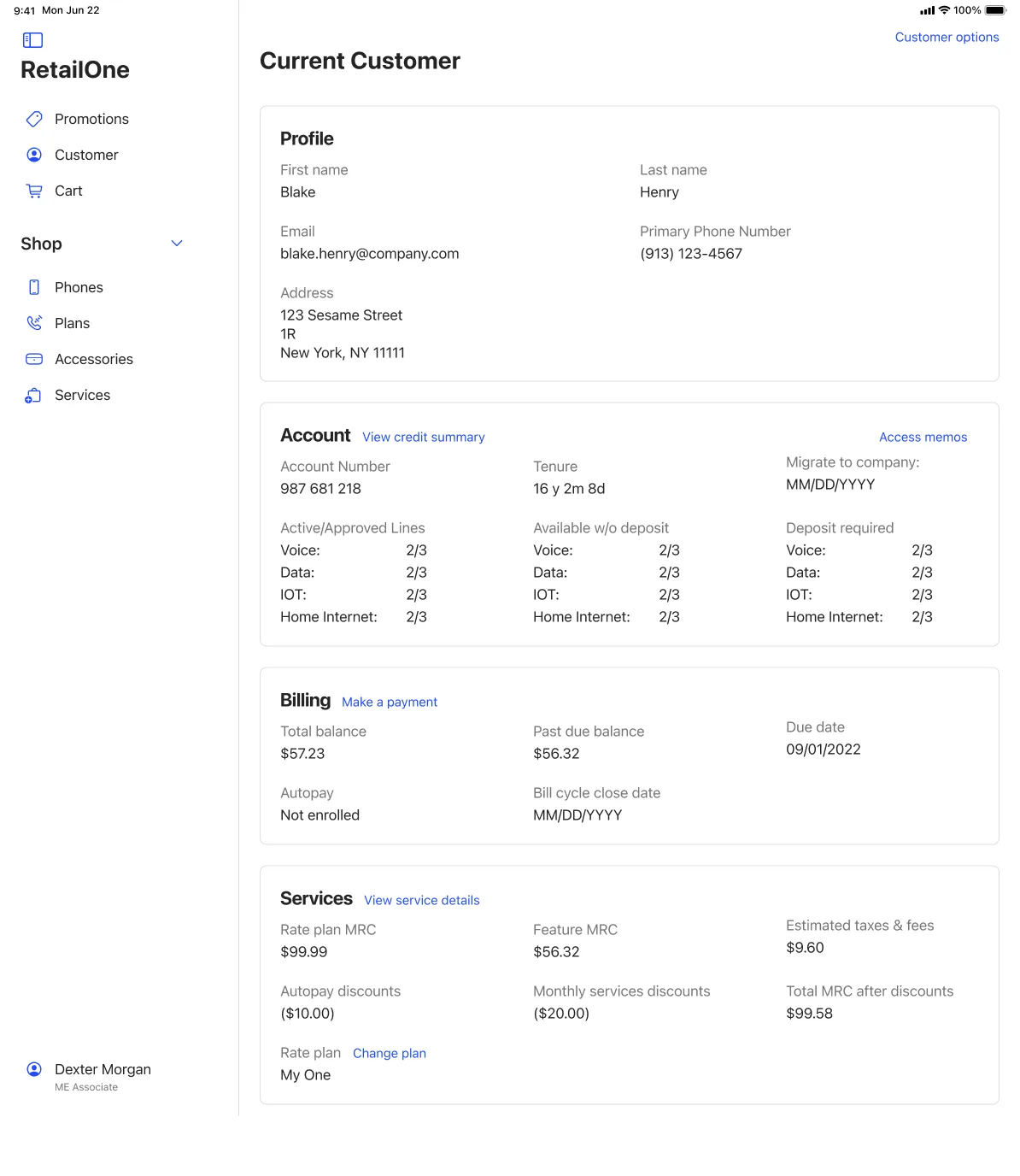
This wasn't just a redesign. It was a shift in how the system works.
The Quick Audit helped turn a fragmented set of tools into a more cohesive, intuitive experience that supports how retail actually operates.
Due to the confidential nature of this work, details and visuals have been adjusted or recreated. Additional materials available upon request.