Reinventing Commercial Banking with AI
Financial Services (Confidential)
Designed AI workflows for two commercial banking personas, then built the interactive demo that secured five client engagements.
The future was clear.
Showing it wasn't.
Commercial banking teams were buried in manual work. Credit analysis, relationship management, and compliance review each lived in separate systems. Relationship managers switched between tools constantly. Executives had no real-time visibility into performance or pipeline.
The AI opportunity was obvious. The challenge was proving it. Not in theory, but in something executives could see, feel, and commit to.
The demo had to do more than show features. It needed to shift how executives thought about what was possible, in a single conversation.
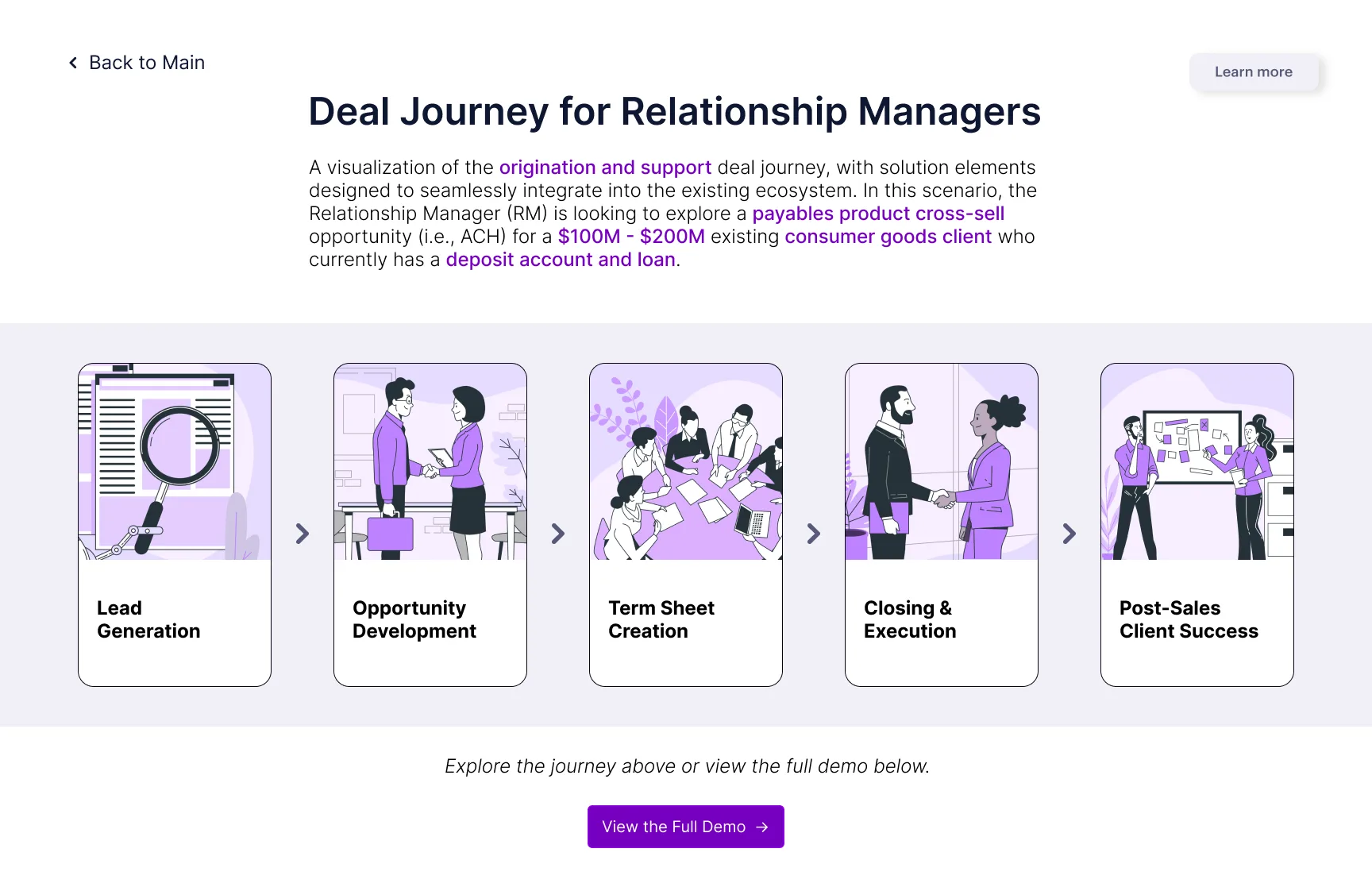
One view for the whole book.
The RM landing gives relationship managers a clear picture of their book at a glance. Upcoming meetings, priority clients, and AI-surfaced signals, all from one entry point. No tab switching, no manual lookups.
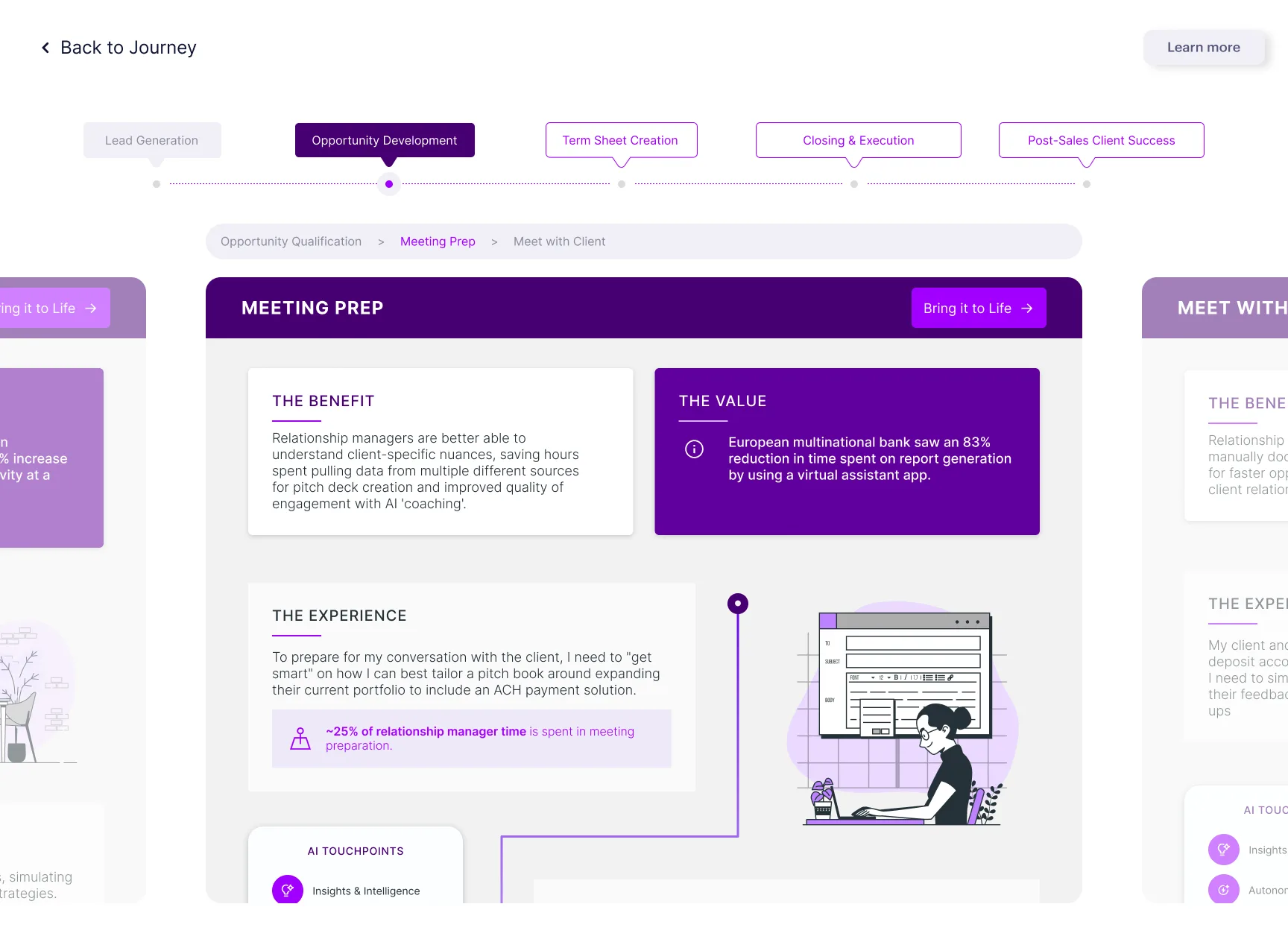
Every step mapped. Every step demoed.
Clicking into a meeting reveals the L2 activity map for that workflow. Each sub-step is annotated with the current experience, AI touchpoints, the benefit, and the future-state vision. Stakeholders could see exactly what changes and why.
Every L2 step links to a live demo. The meeting prep screens in the next section are those demos, each built to bring a specific annotation to life as a working interaction.
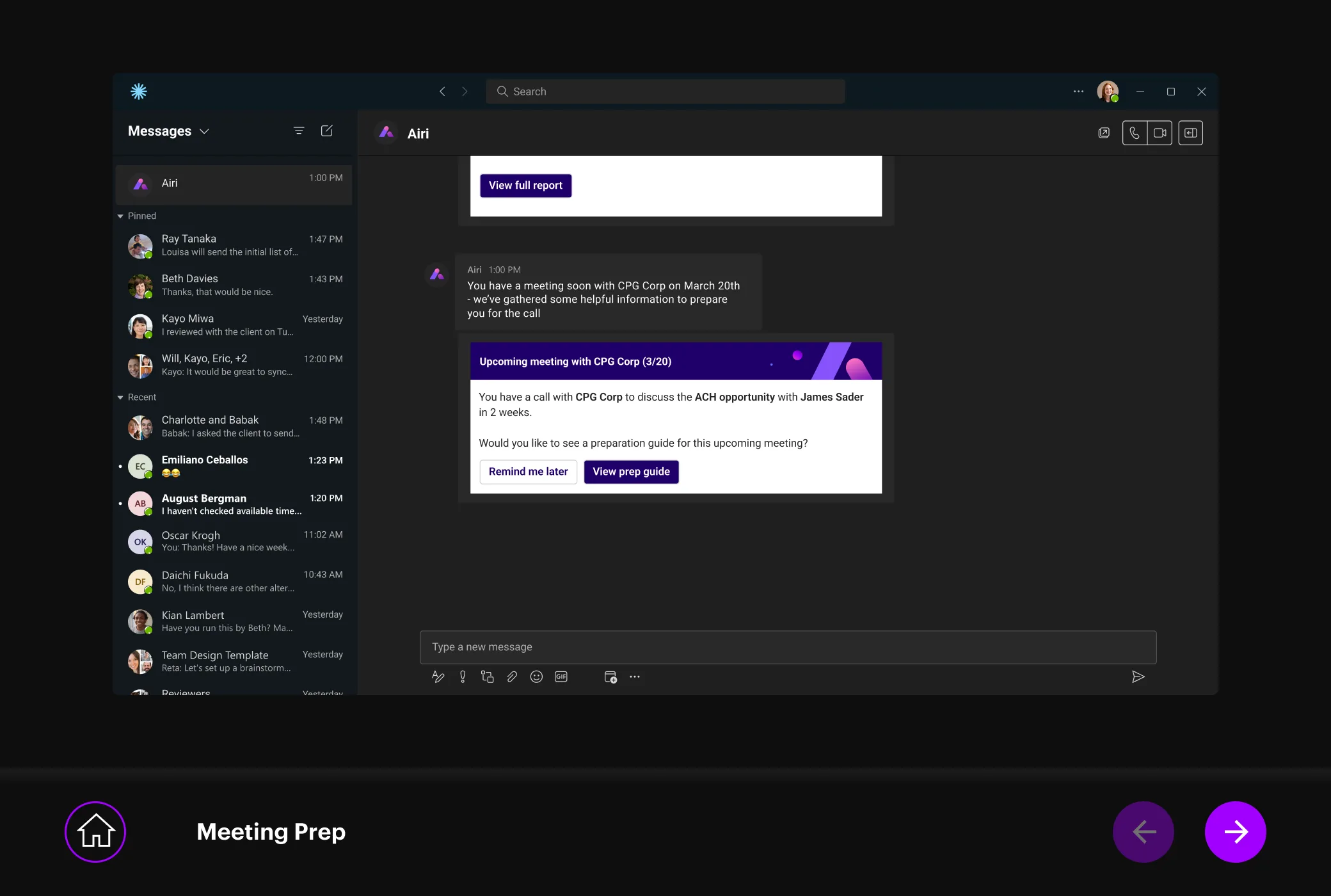
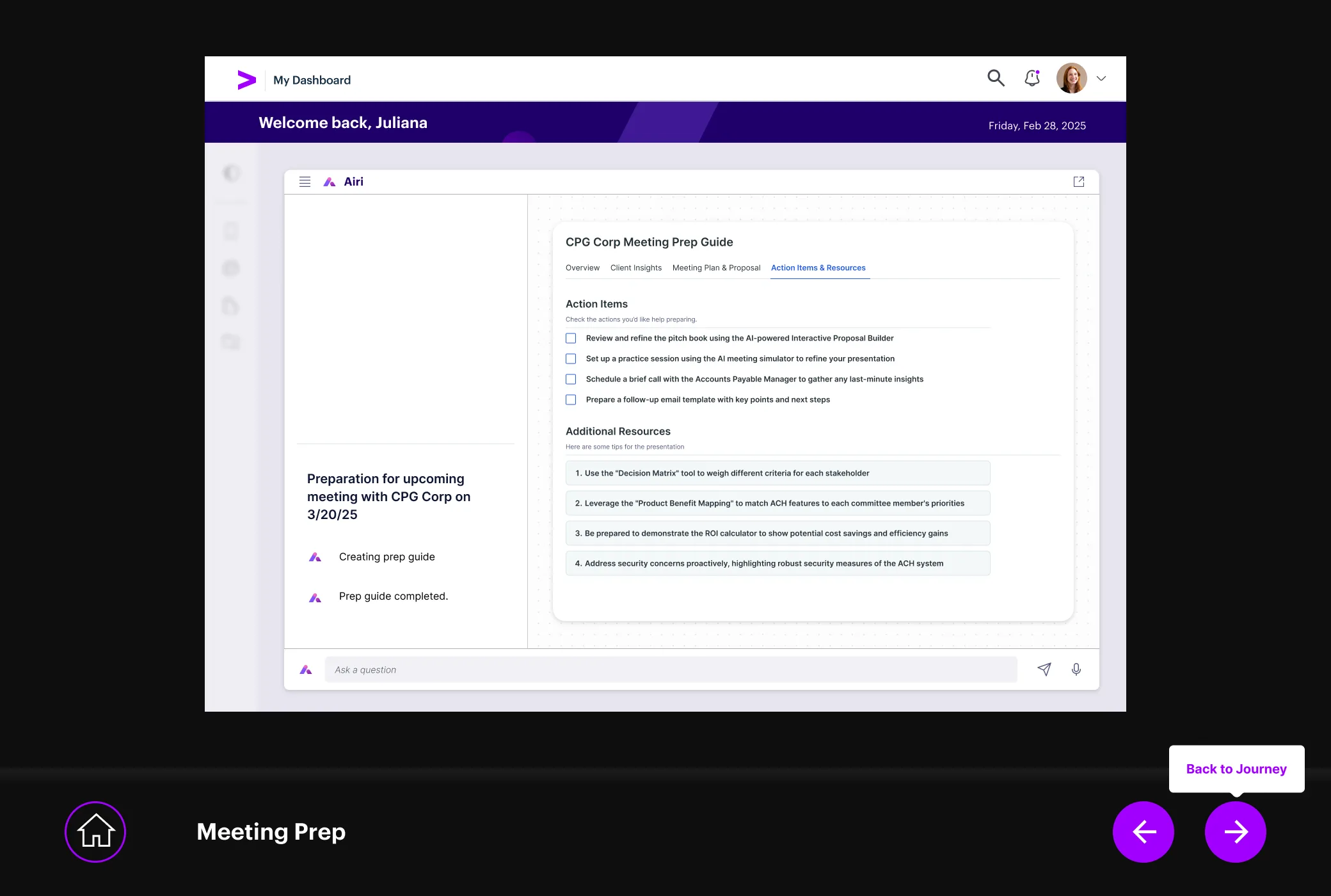
AI as a prep partner, not a search engine.
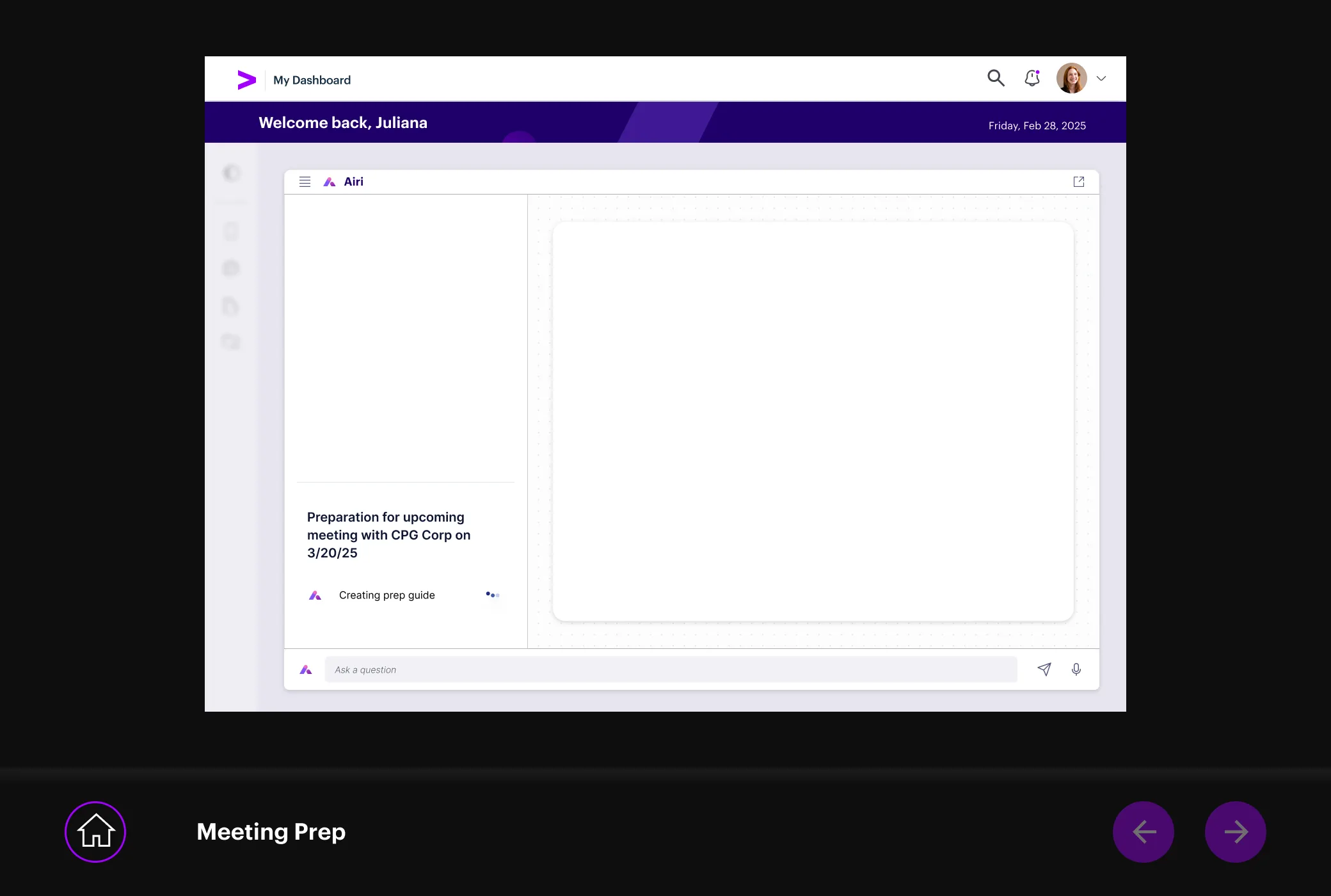
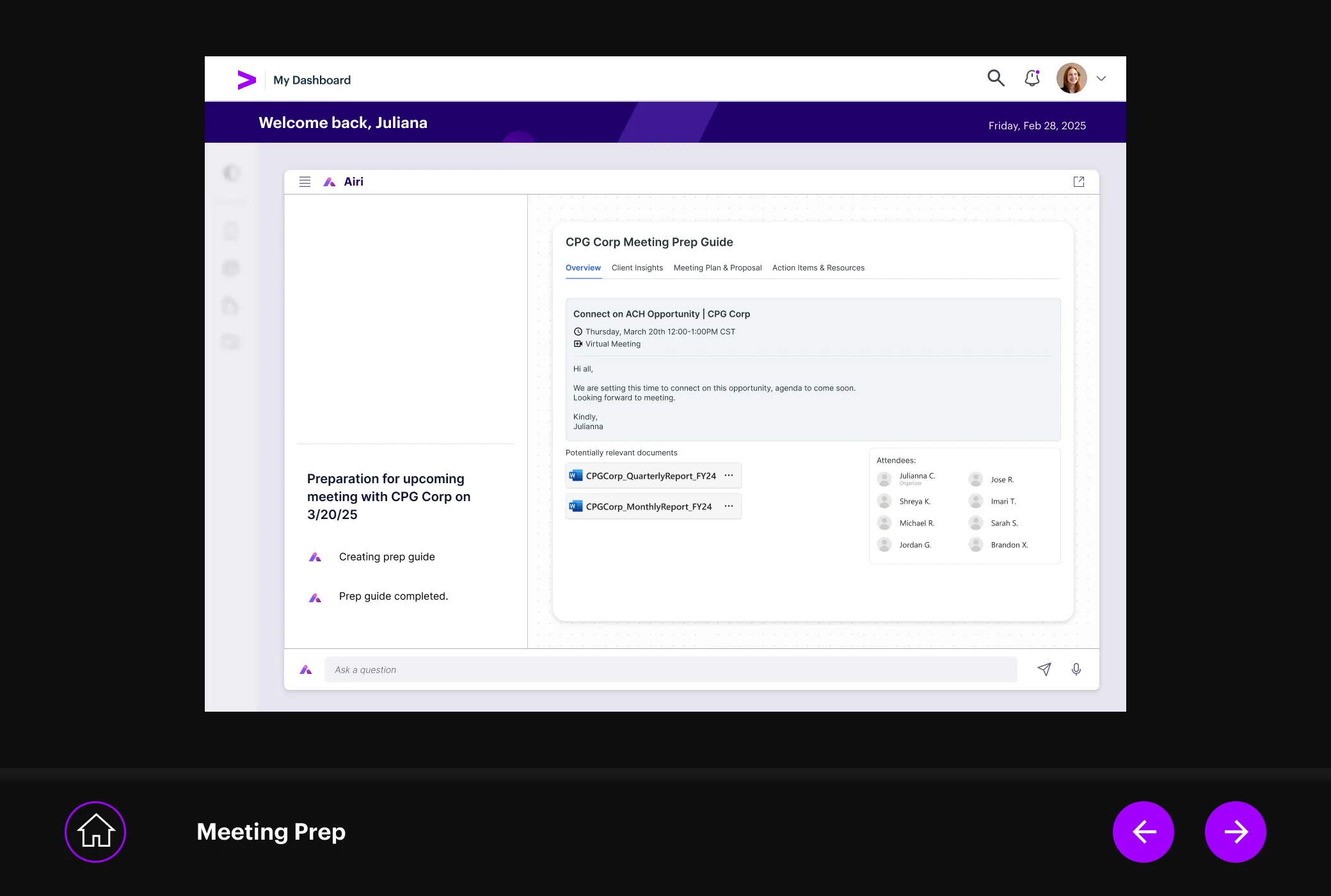
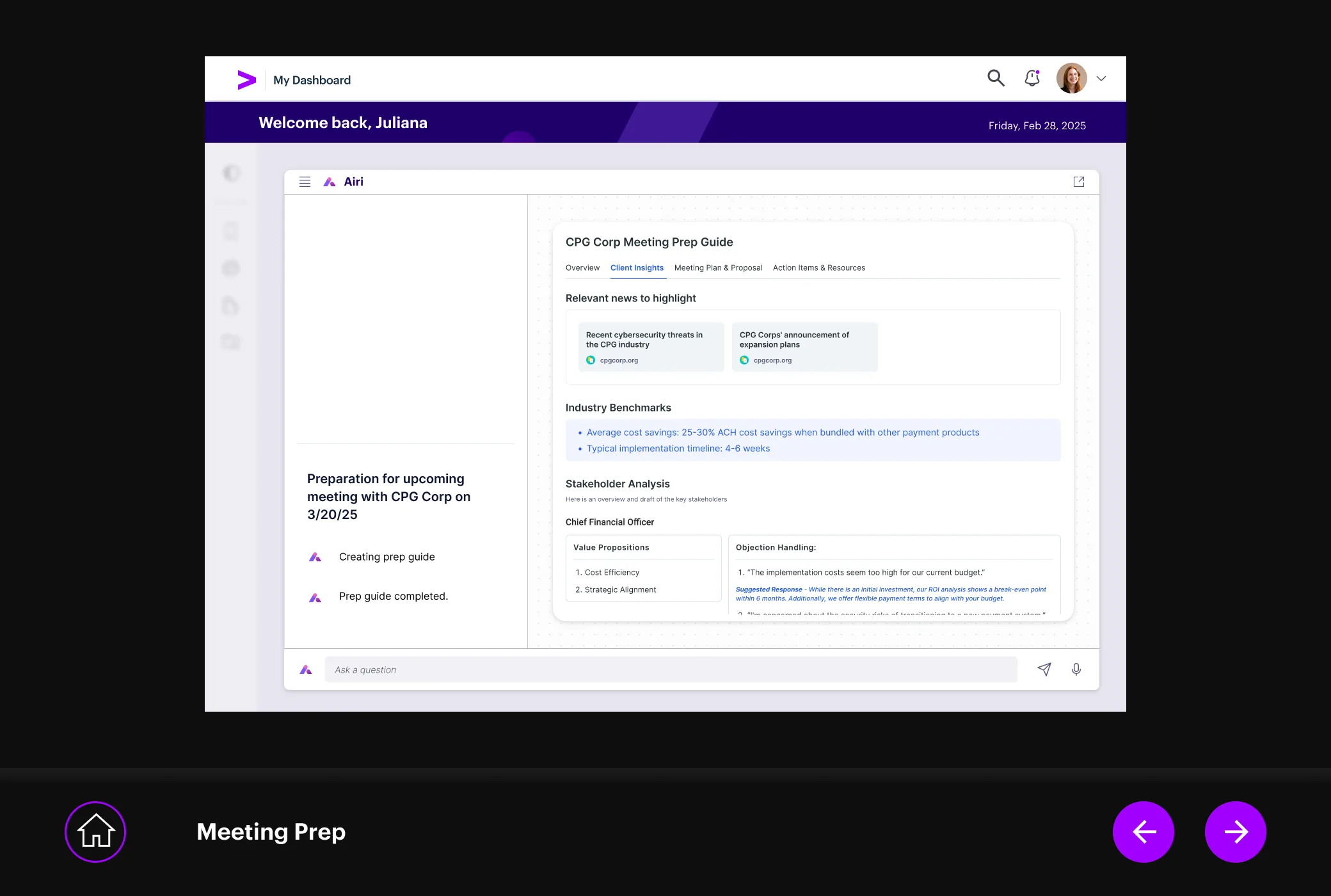
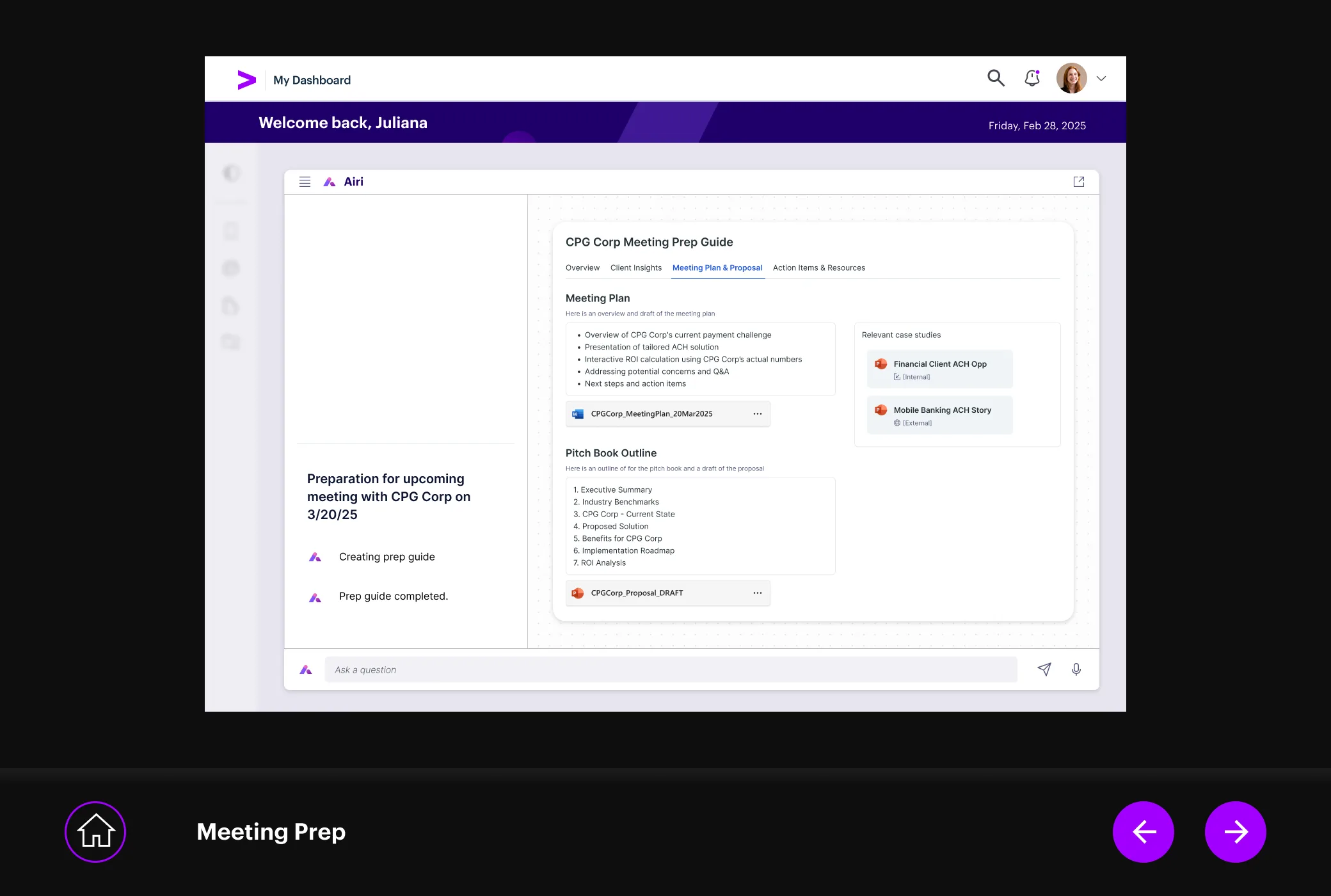
The meeting prep flow lets RMs talk to their data. Ask a question, get an answer grounded in account history, financials, and recent signals. The AI drafts talking points, flags risks, and suggests next steps. The RM decides what goes into the room.
Use the arrows inside the demo to step through the flow.
Visibility without the noise.
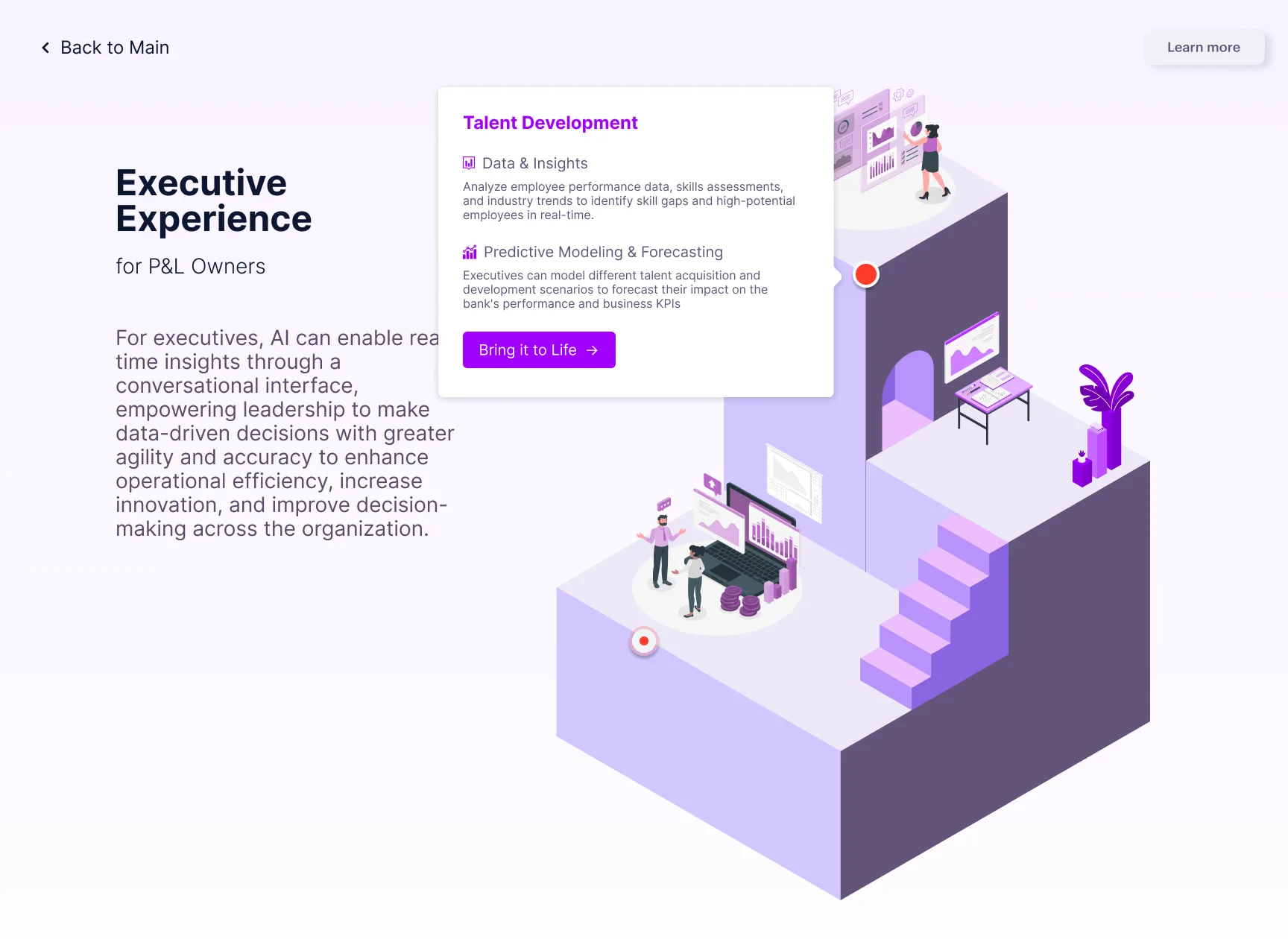
The executive landing surfaces what leaders actually need: portfolio health, team performance, and AI-identified risks, without requiring them to dig into individual accounts. The signal is filtered. The context is clear.
AI as a coaching partner.
Beyond portfolio performance, executives needed a way to develop their teams. The talent development module gives leaders an AI-assisted view of each RM's strengths, skill gaps, and growth opportunities. The AI identifies patterns across the team, not just individuals, and suggests targeted development plans grounded in real performance data.
Use the arrows inside the demo to step through the flow.
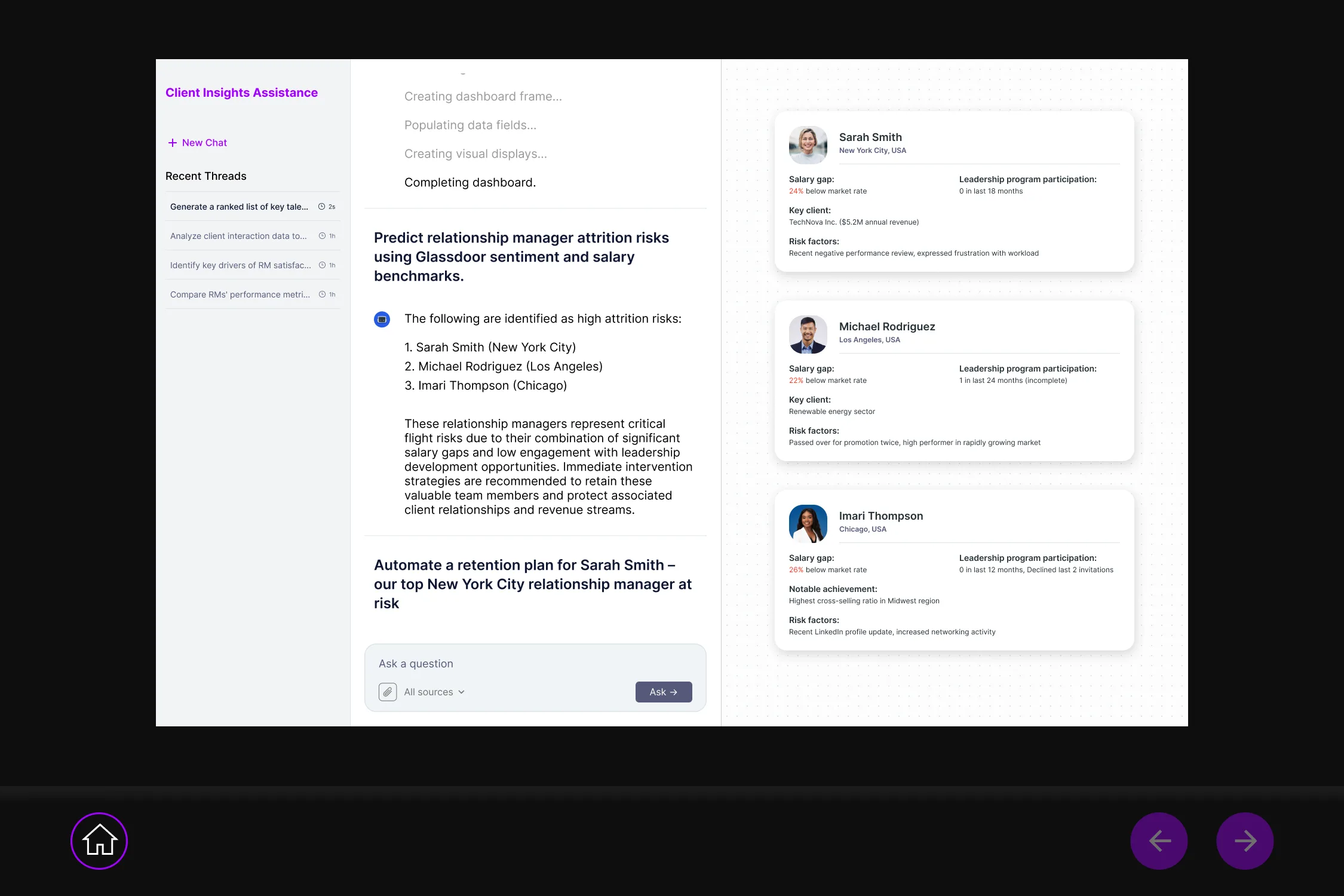
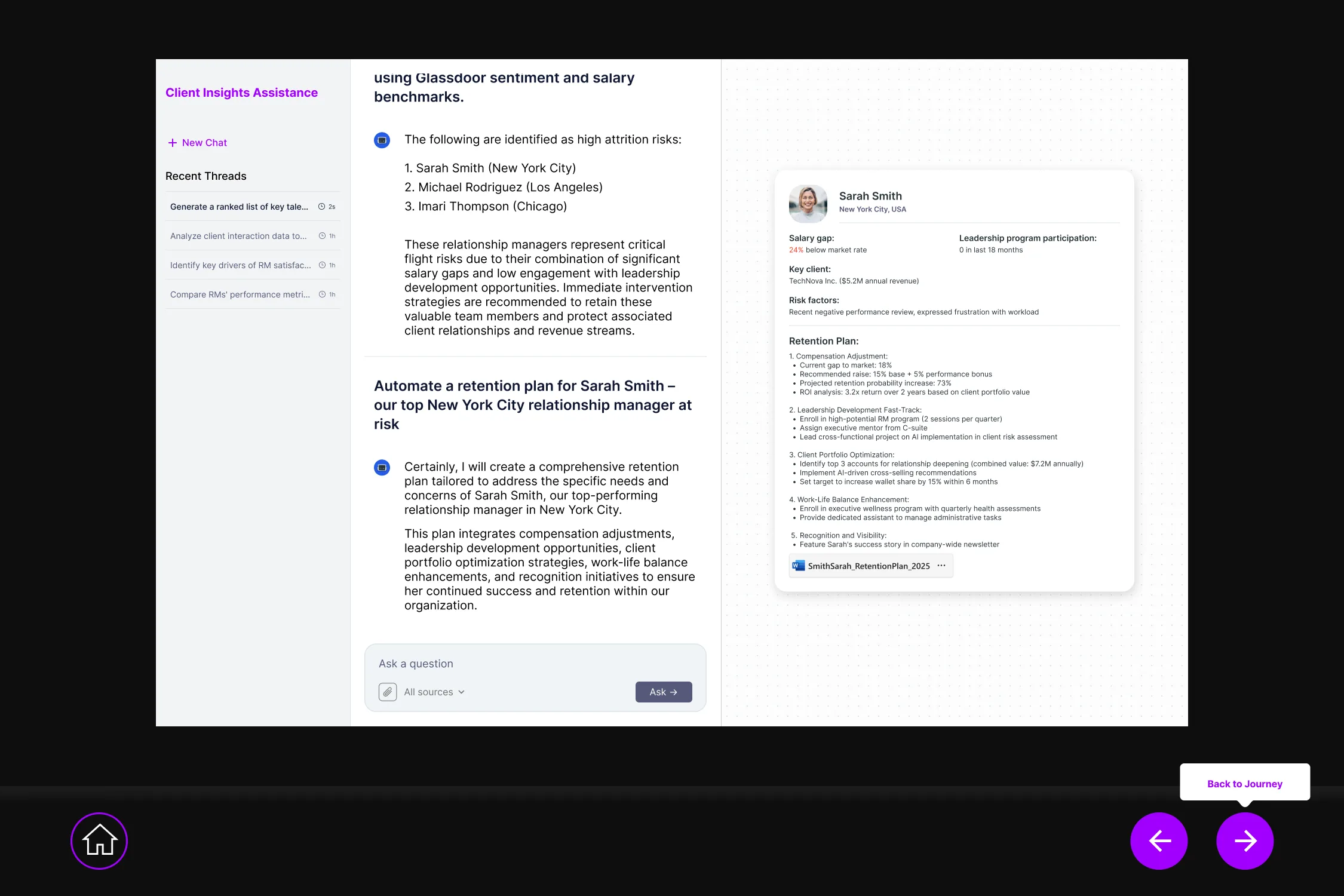
The demo wasn't a prototype. It was a proof of possibility. Its job was to make executives feel the future, not just understand it.
5+Engagements secured11AI workflows designed2Personas built
Key Decisions
What shaped the work, and what made the demo land.
Show the workflow, not the technology
The most effective demo moments were when AI disappeared and the task just worked. We designed for the outcome, not the capability.
Six scenarios. One tight narrative.
Designed and prototyped 11 AI-assisted workflows across both personas. Each pitch used only the one or two that matched that client's specific pain.
Credibility through specificity
Generic banking demos fail in the room. Every scenario was grounded in real workflows from discovery. The data, the names, the numbers all felt like they belonged.
Design for the room, then redesign after it
After each pitch session, the demo changed. Objections got answered in the next version. The final demo was shaped as much by what didn't land as by what did.
What it moved
What I'd carry forward
The most powerful design tool in a pitch is specificity. Executives can tell when something was made for them versus made for everyone.
A demo is a hypothesis about what will resonate. Each pitch session is a test. The discipline is actually changing the demo based on what you learn.
Future-state design is most effective when it is grounded in the present state. The gap between where teams are and where they could be is the story.
Due to the confidential nature of this work, details and visuals have been adapted. Additional materials available upon request.